Distant Reflection
Location: Glendale, CA
Status: Competition Entry - Shortlisted
Size: 230 FT
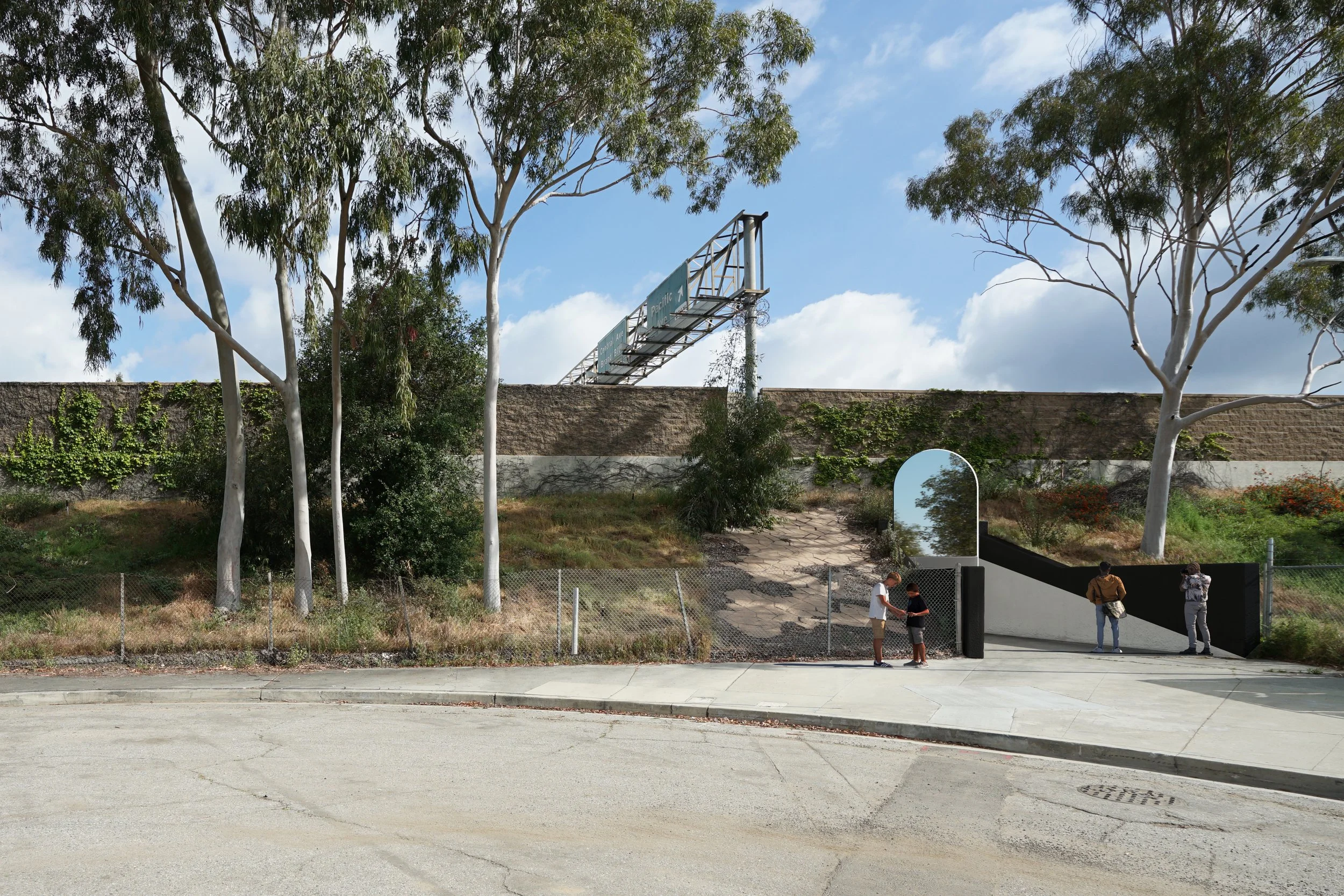
This proposal sought to highlight the imbalance in prioritization of highway infrastructure over neighborhood connectivity and to emphasize this very small stitch in an otherwise massive expanse of concrete highway. Through the use of light, color, and reflection, the intervention at the center of the existing pedestrian tunnel is also intended to symbolize the portion of Fairmont Avenue that was erased during the construction of the 134.
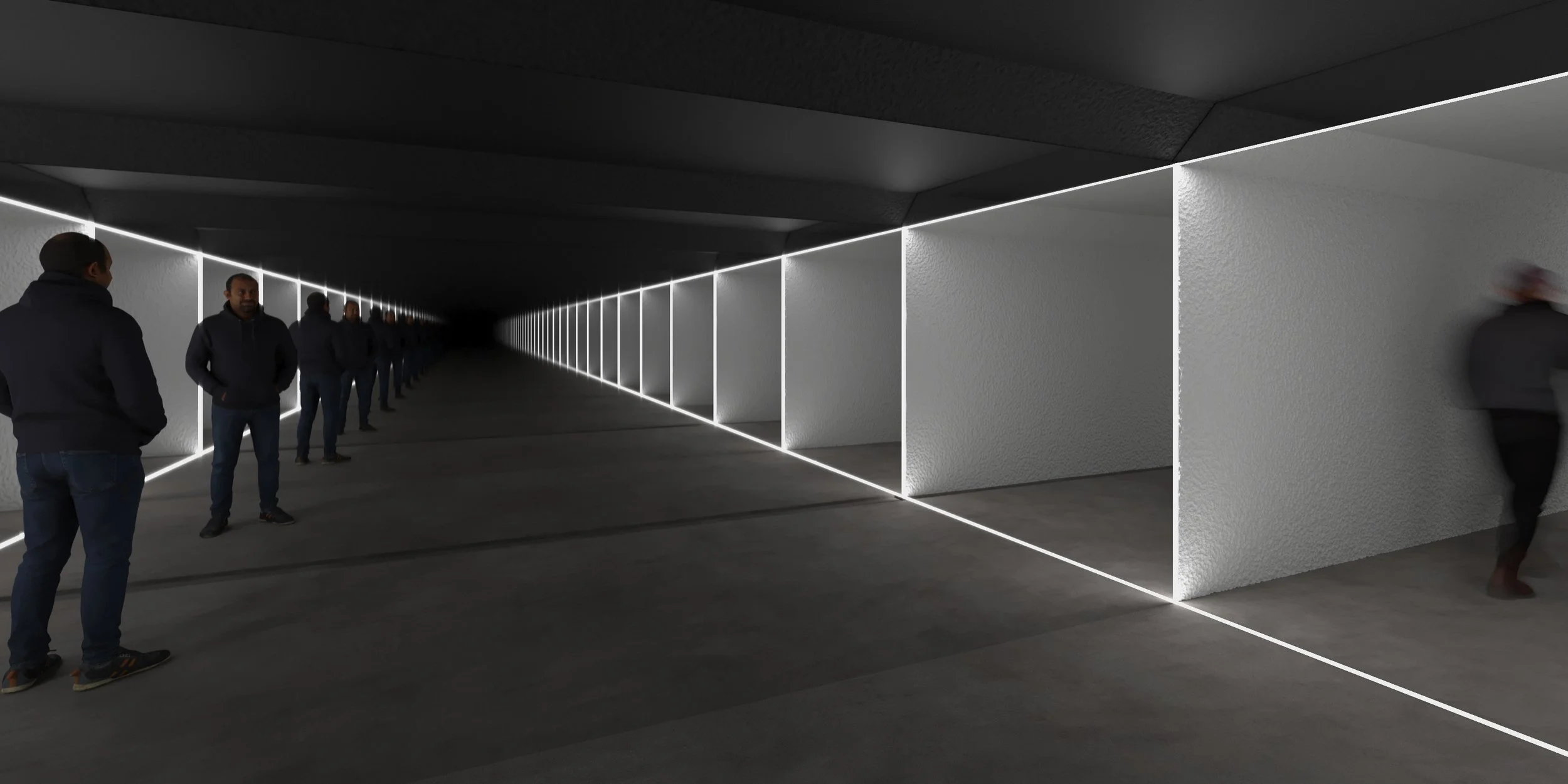
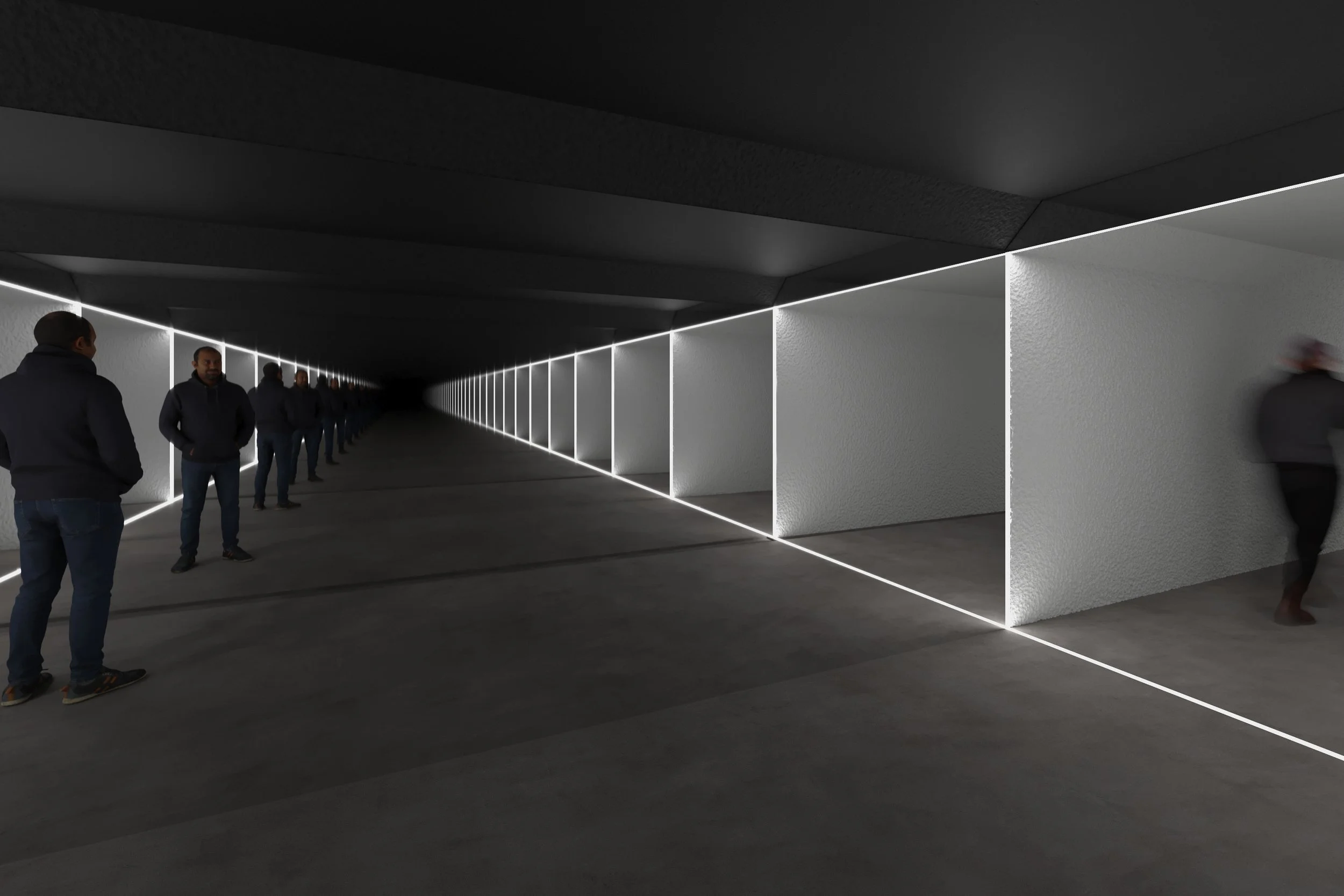
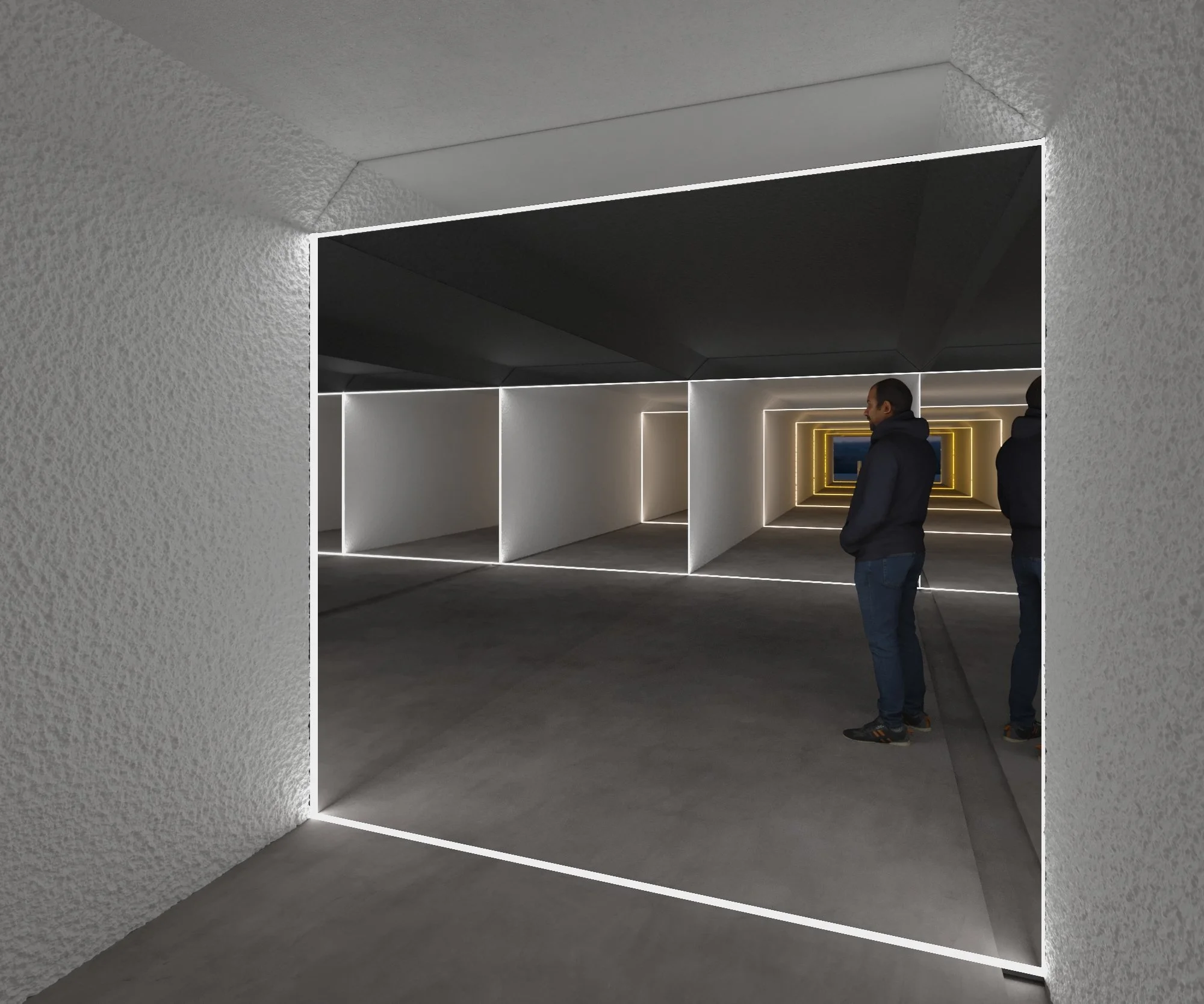
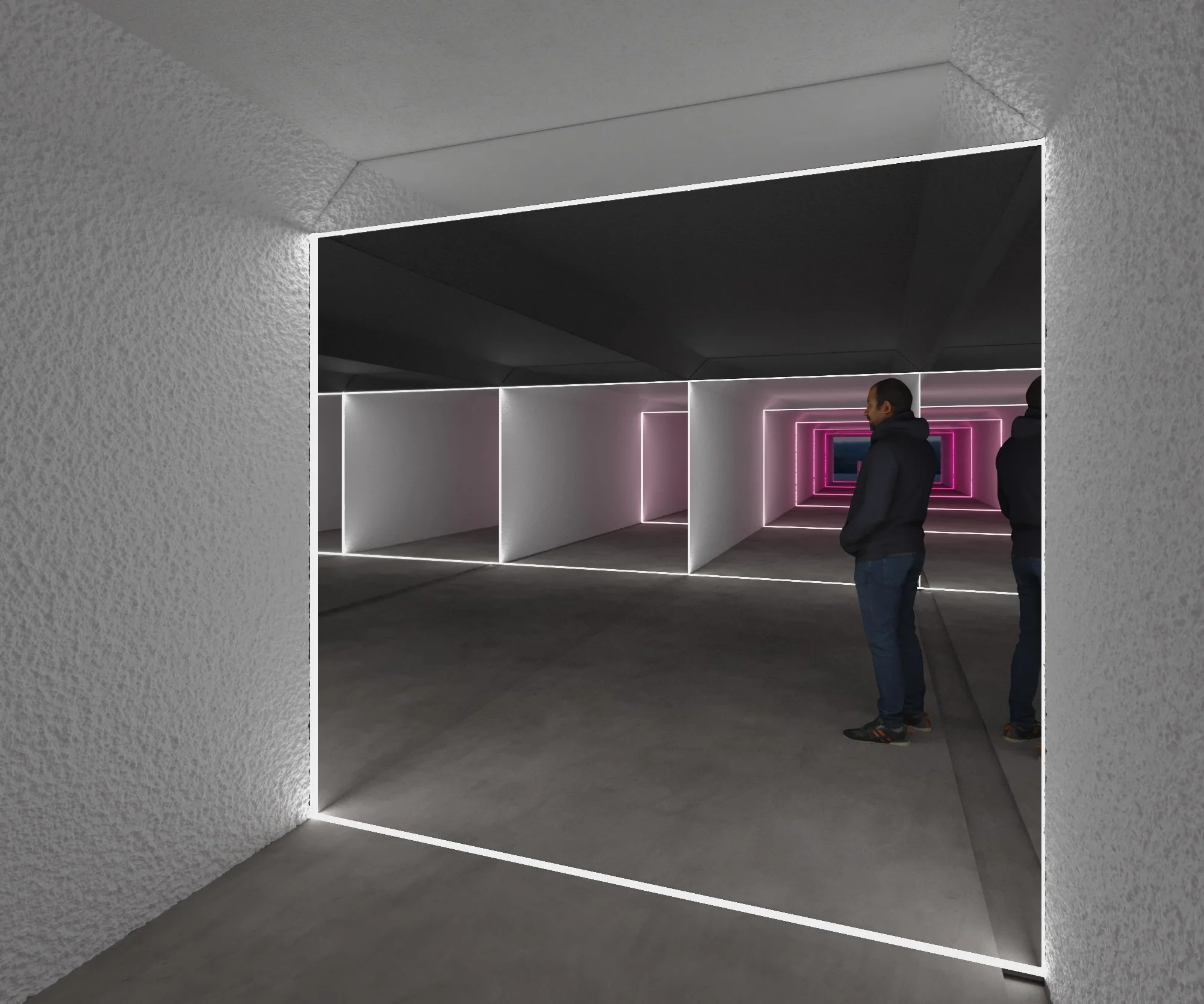
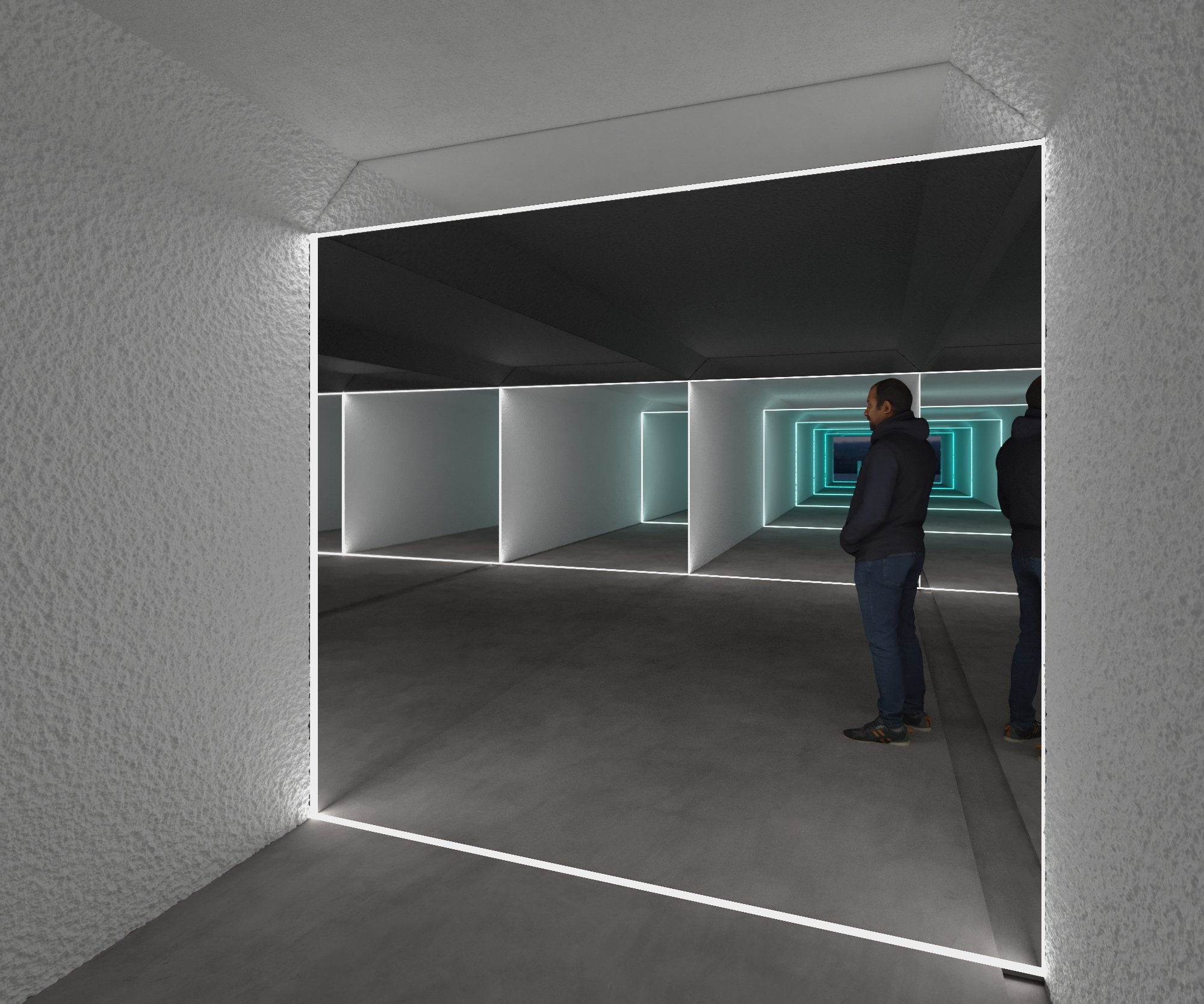
At the center of the tunnel, we are proposing to resurface opposing portions of the existing walls with mirrors. The nearly infinite reflections create a spatial illusion, making it appear as if there is a transverse tunnel running perpendicular to the existing one. This illusion occurs approximately where Fairmont Avenue would have intersected the existing tunnel prior to its demolition.

City Transformation
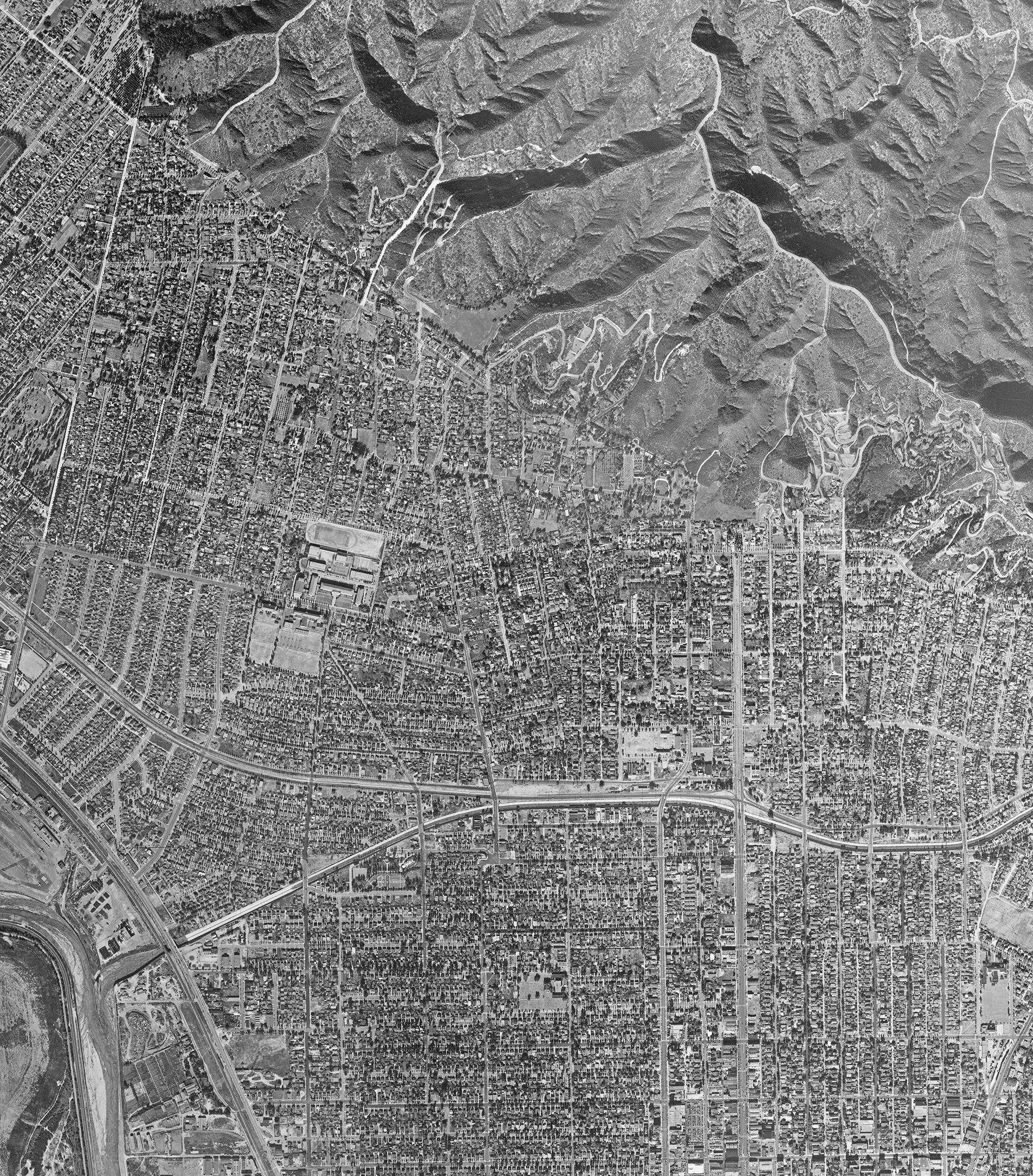
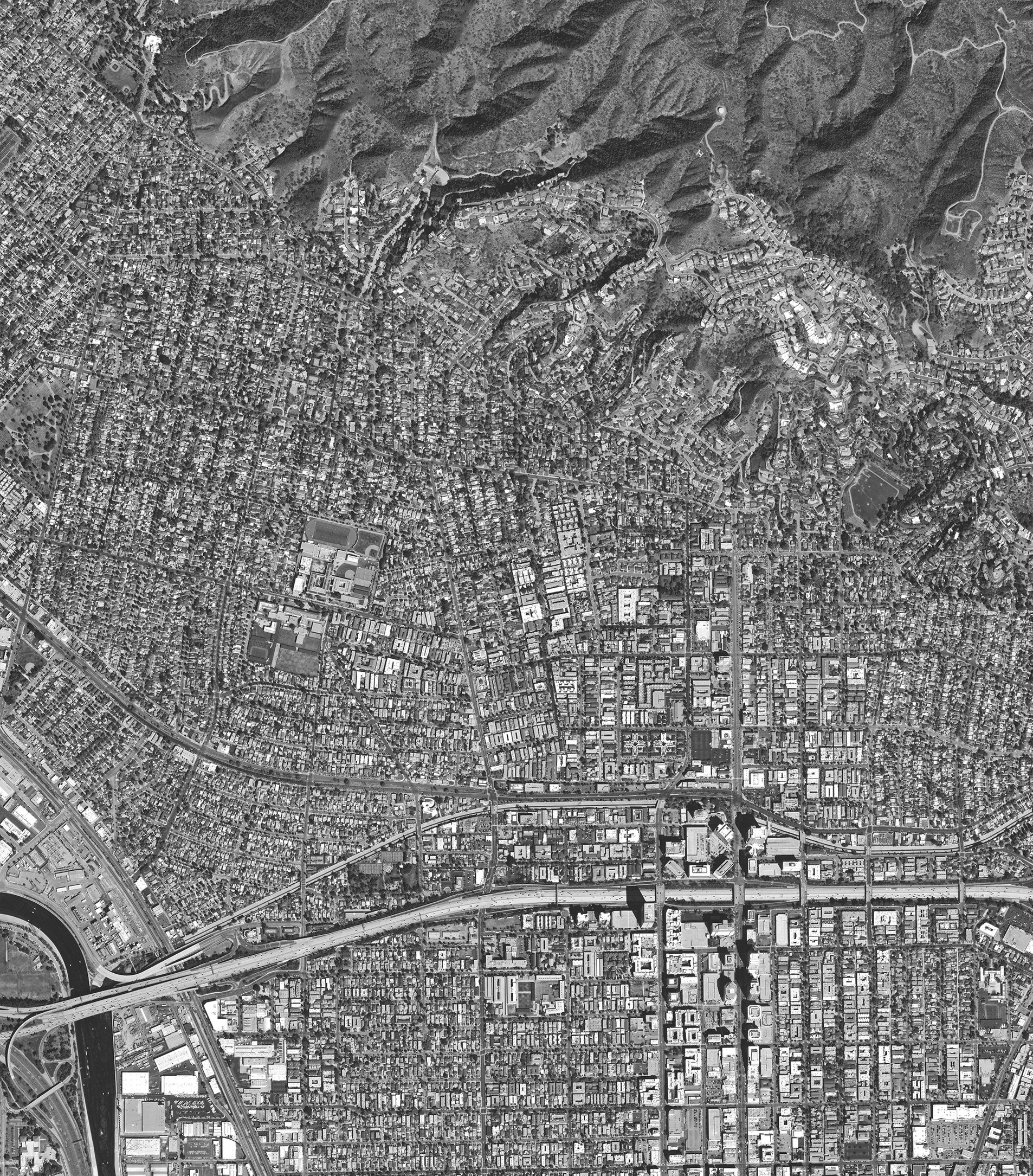
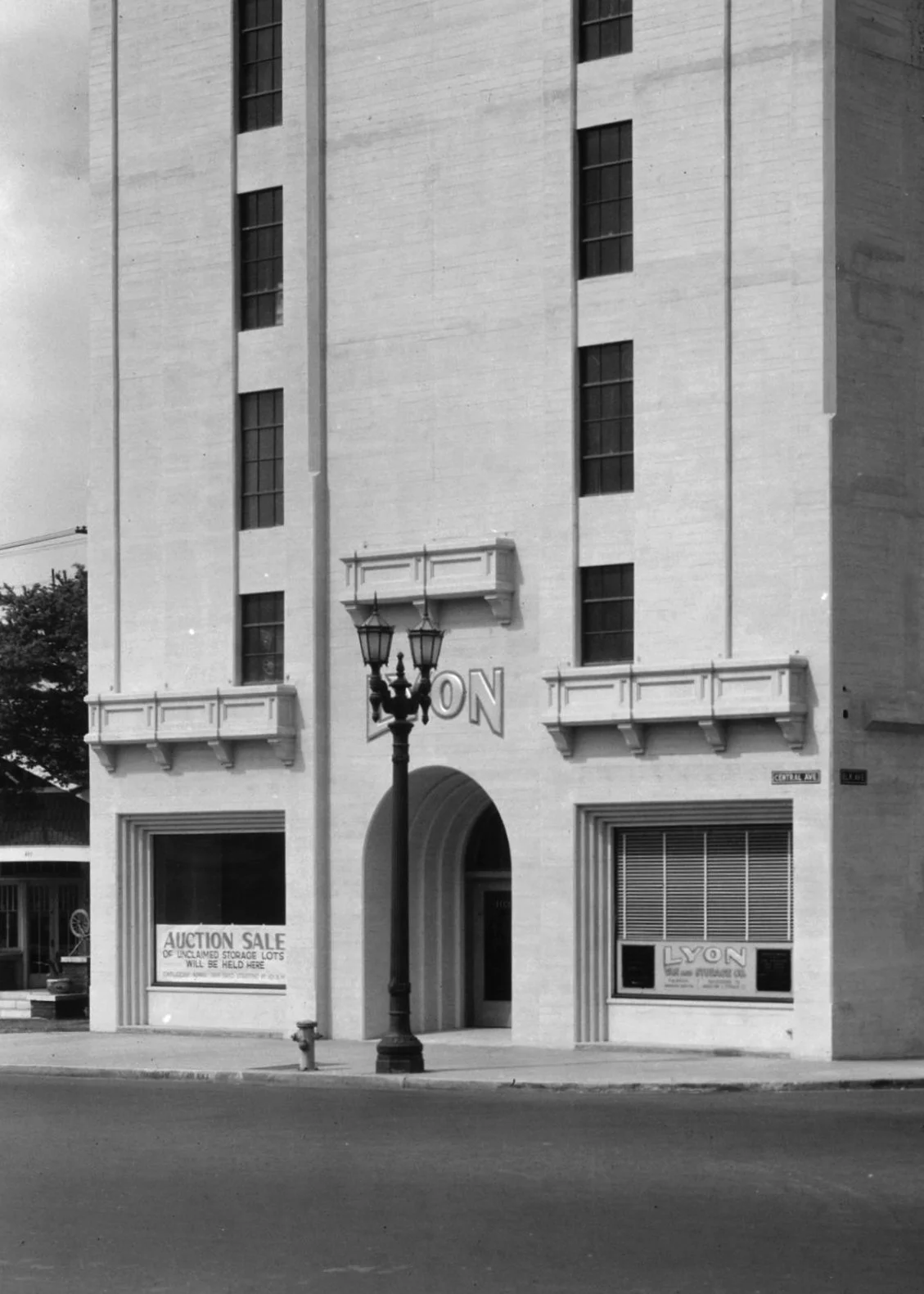
A historical comparison from a birds eye view can effectively illustrate how a city has grown over time, but it can also highlight significant events that result in far more abrupt changes. While the City of Glendale has no doubt densified and crept further into the Verdugo Mountains over the past 80 years, one of the most glaring interventions has been the 134/Ventura Highway. The expansion of interstate highway systems allowed for much greater connectivity between cities and communities, but the side effects could mean erasure of parts of the city, and in the case of Glendale, meant that entire blocks and portions of streets such as Fairmont and Patterson Avenues were removed.
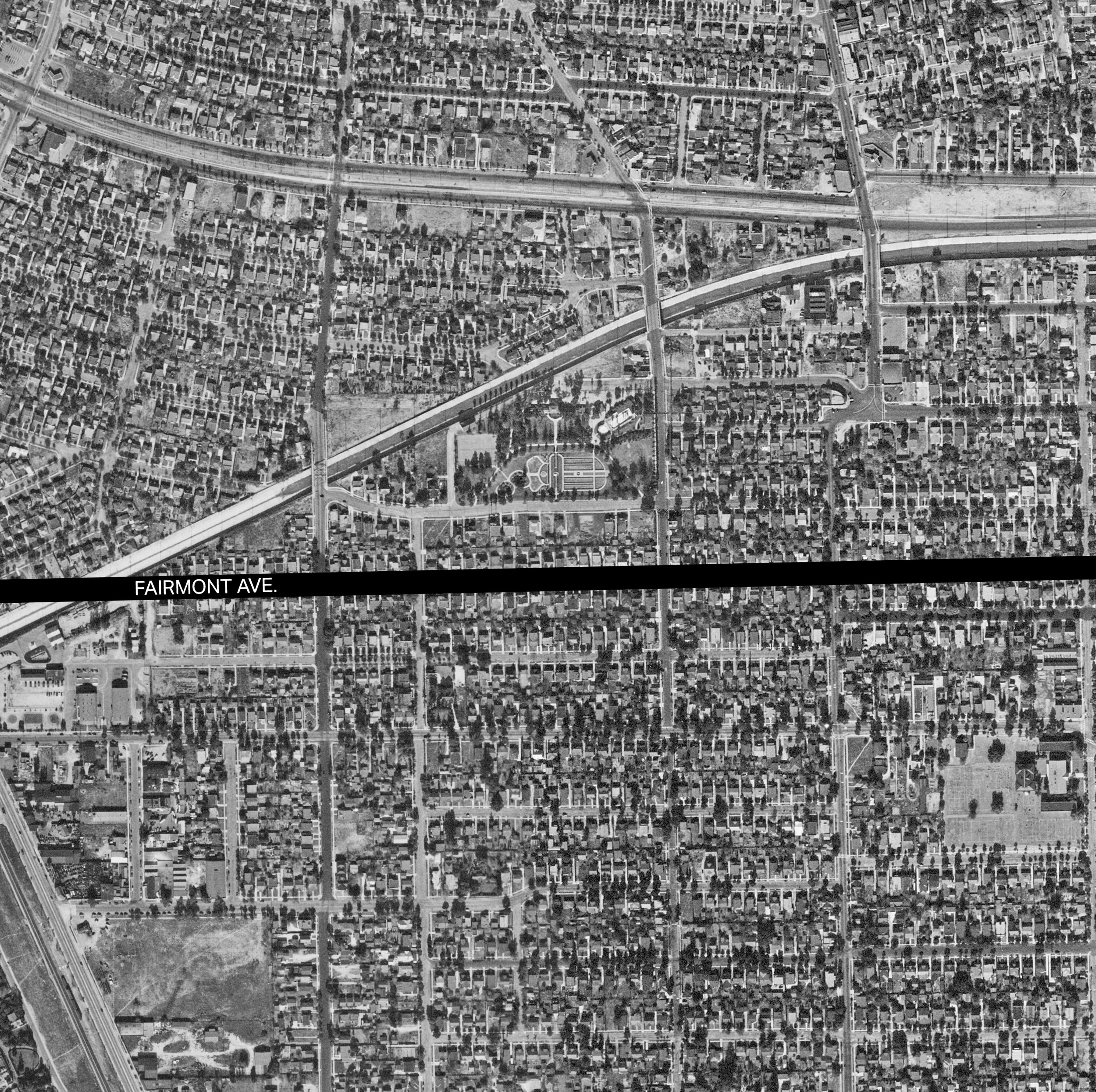
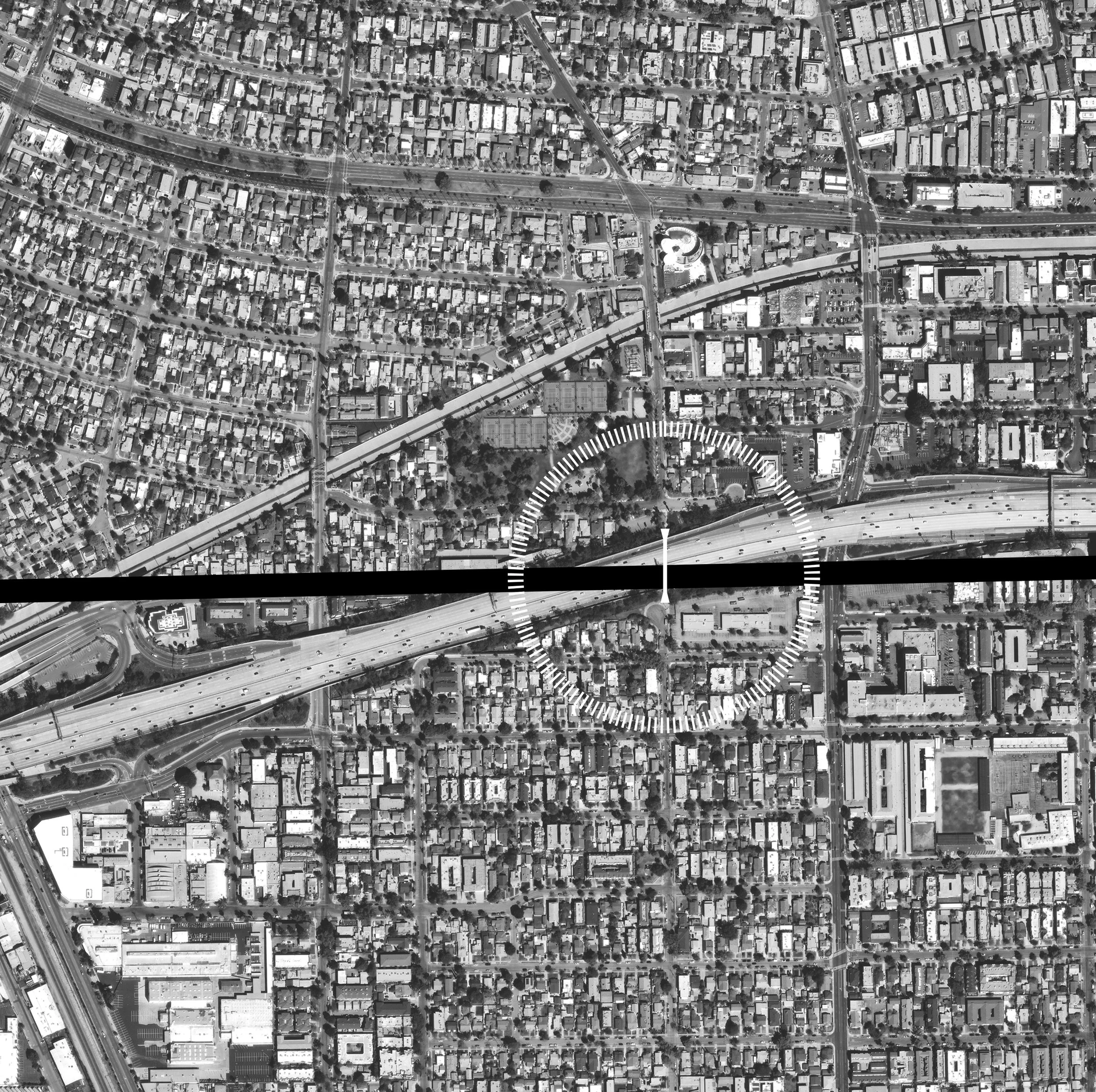
Neighborhood Transformation
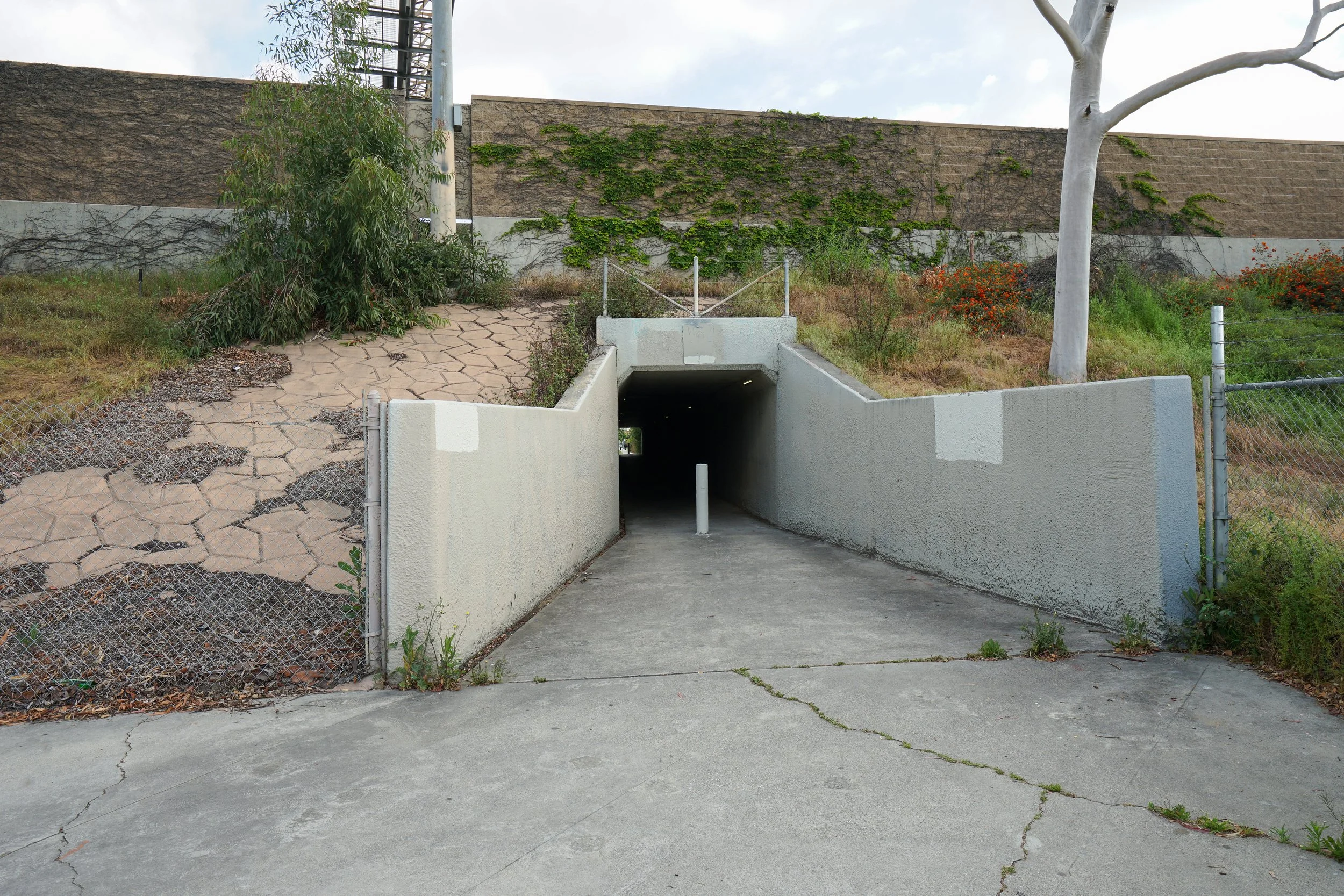
While ubiquitous in most American cities, we often forget what our neighborhood fabric would have been like before these roads became barriers and walls separating communities. While not always malicious, their presence inevitably disconnects neighbors and almost always makes traversing these highways as pedestrians more difficult. The tunnel connecting Patterson to Kenilworth Avenue has clearly been a solution to help safely mend this breach. However, the utilitarian concrete structure is disconnected from its place and the communities it connects.
The Stitch
This installation sought to highlight the imbalance in prioritization of highway infrastructure over neighborhood connectivity and to emphasize this very small stitch in an otherwise massive expanse of concrete highway. Through the use of artificial light, color, and reflection, the intervention at the center of the existing pedestrian tunnel is also intended to symbolize the portion of Fairmont Avenue that was erased during the construction of the 134.
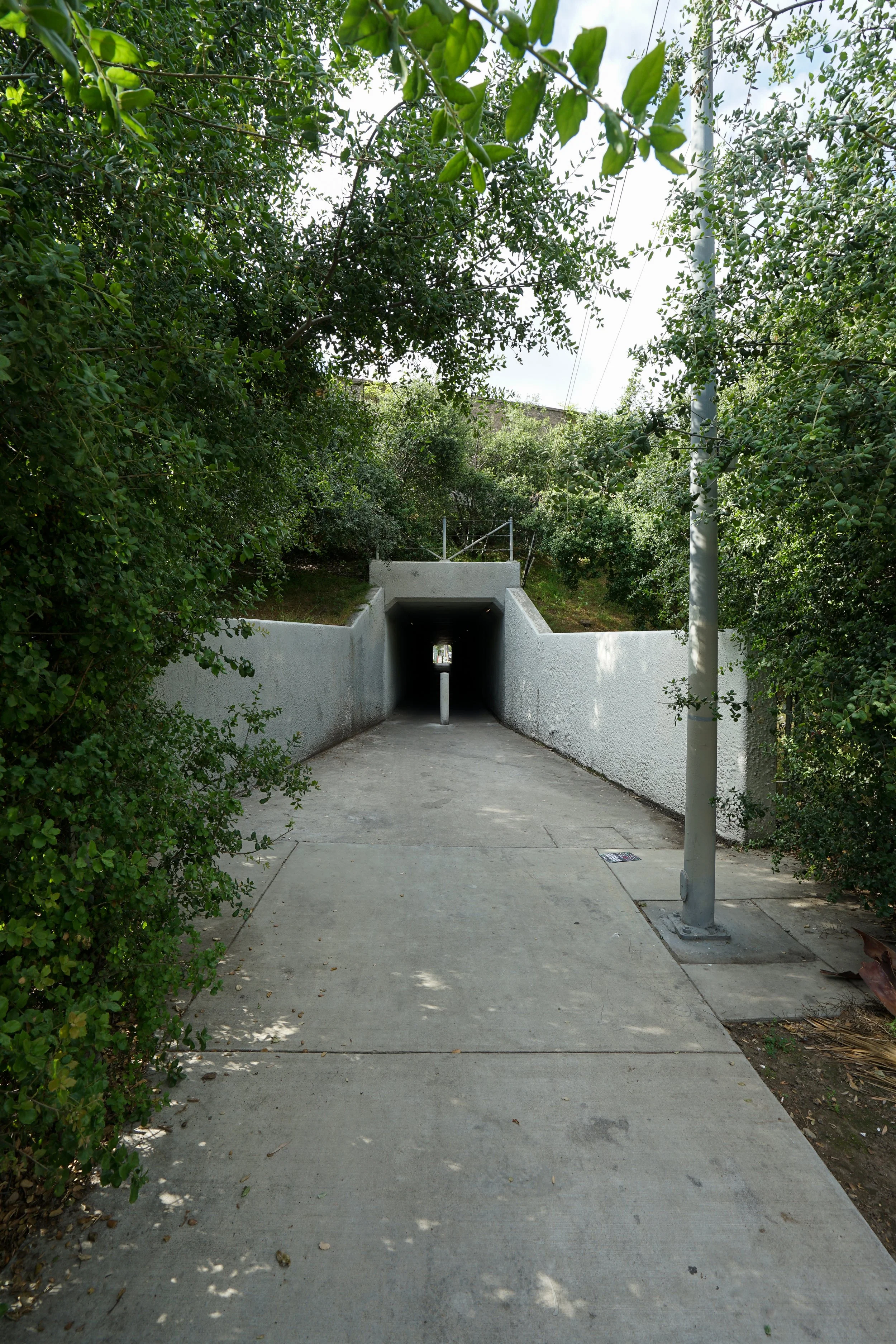
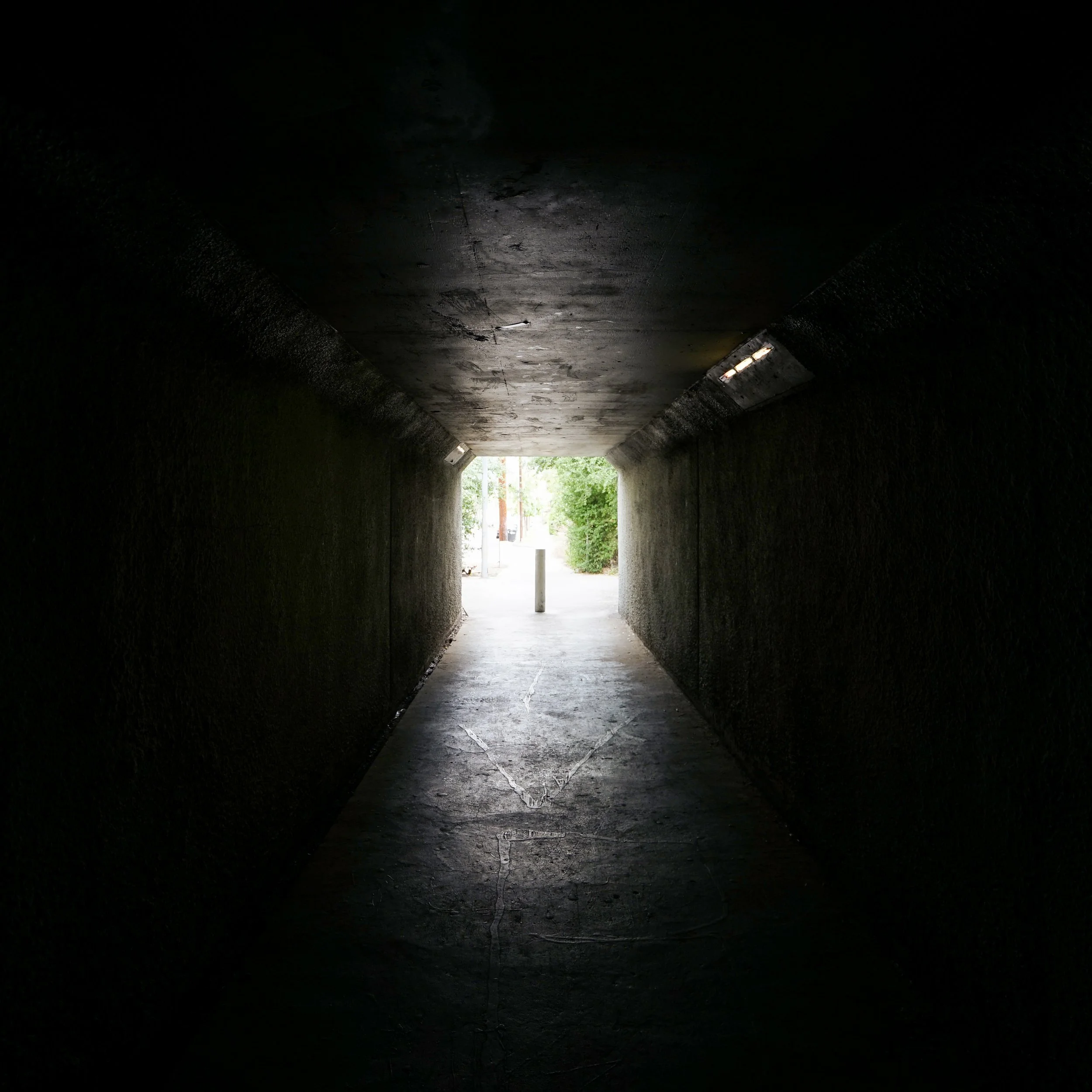
Expansion Through Reflection
At the center of the tunnel, we are proposing to resurface opposing portions of the existing walls with mirrors. The nearly infinite reflections create a spatial illusion, making it appear as if there is a transverse tunnel running perpendicular to the existing one. This illusion occurs approximately where Fairmont Avenue would have intersected the existing tunnel prior to its demolition.
Glendale Iconography
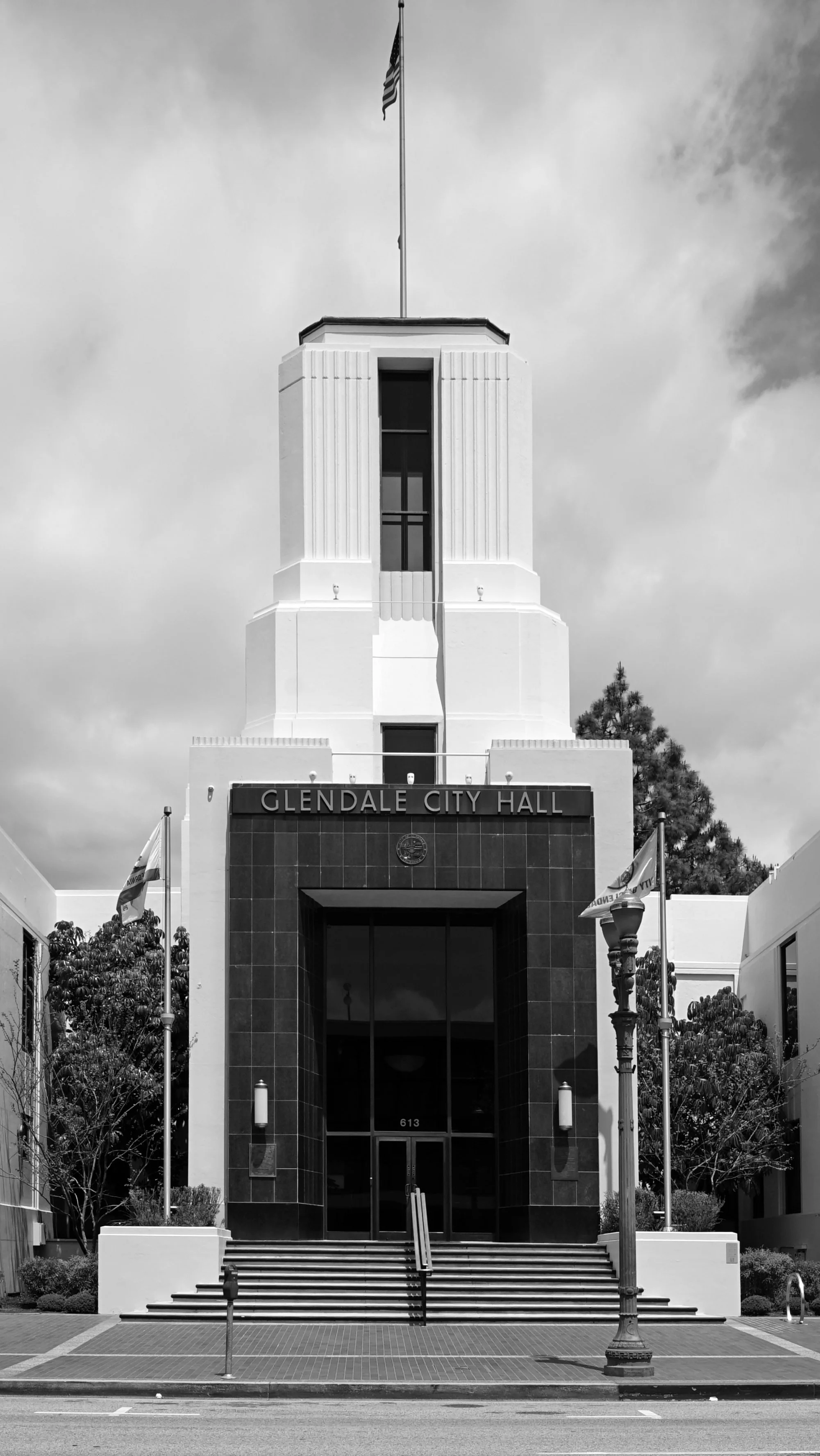
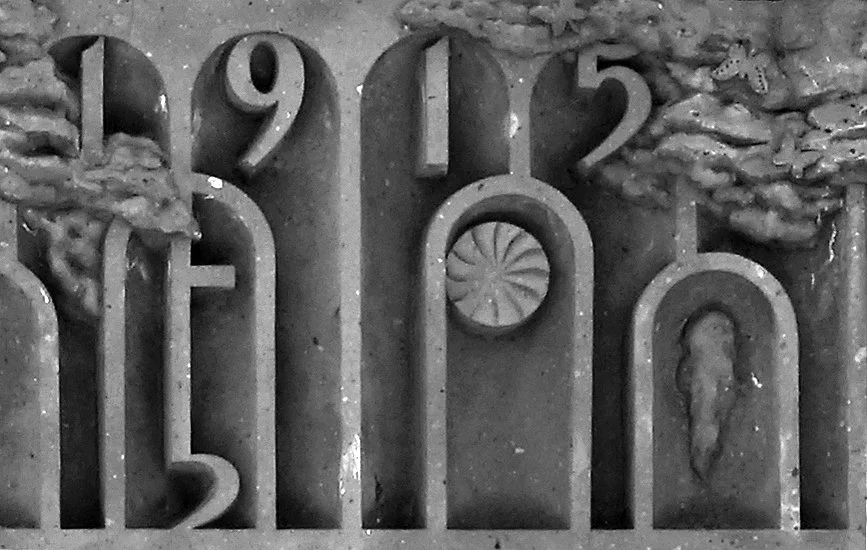
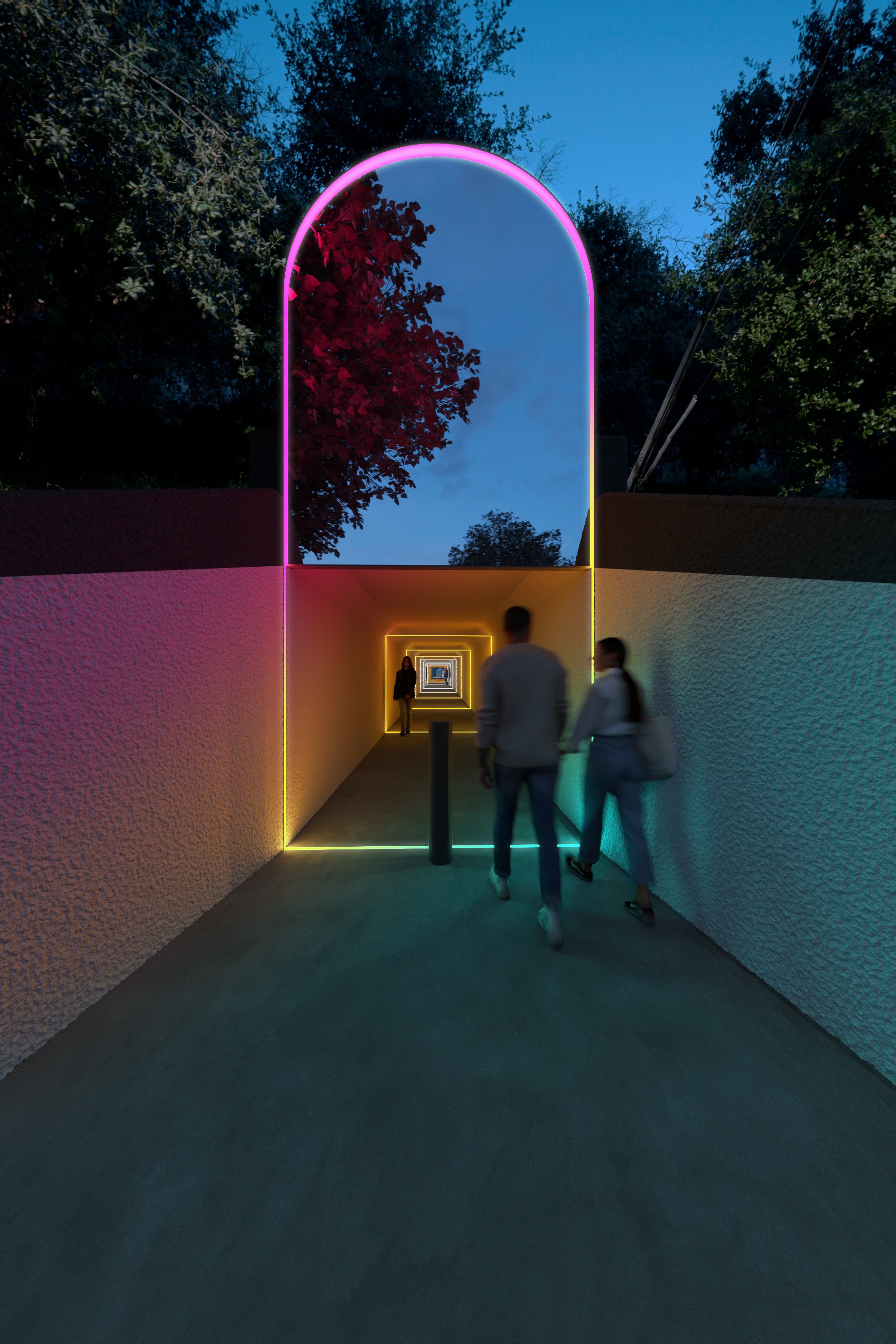
The use of geometry and scale can contribute to the monumentality of a place or structure. There is no shortage of such landmarks throughout Glendale’s history. We are attempting to elevate the prominence of the pedestrian tunnel against the backdrop of the overwhelming scale of the 134 by manipulating the entrances to the tunnel. A mirror clad arched panel creates another illusion which stretches the height of the entryway and begins to draw attention to the tunnel. This declaration of place is an attempt to re-emphasize the pedestrian connection between neighborhoods and suppress the dominance of the highway infrastructure.
Color & Safety
The use of color will allow the art installation to present itself differently throughout the day and night. We envisioned the lights to remain white during the day to help mitigate the contrast between the bright California sun and the subterranean darkness in the existing tunnel. At night, we imagined the lights slowly cycling through several colors, gently fading from one to another. Within this color change, there would be a gradient from the most saturated color at the entrances, fading to a white light at the center of the tunnel. The idea is to ensure that the deepest part of the pedestrian walkway is always as bright as possible, helping to instill a sense of safety and security no matter the time of day or night.