Ranch for an Uncertain Future
Location: Fredericksburg, TX
Status: Ongoing
Size: 7,200 SF
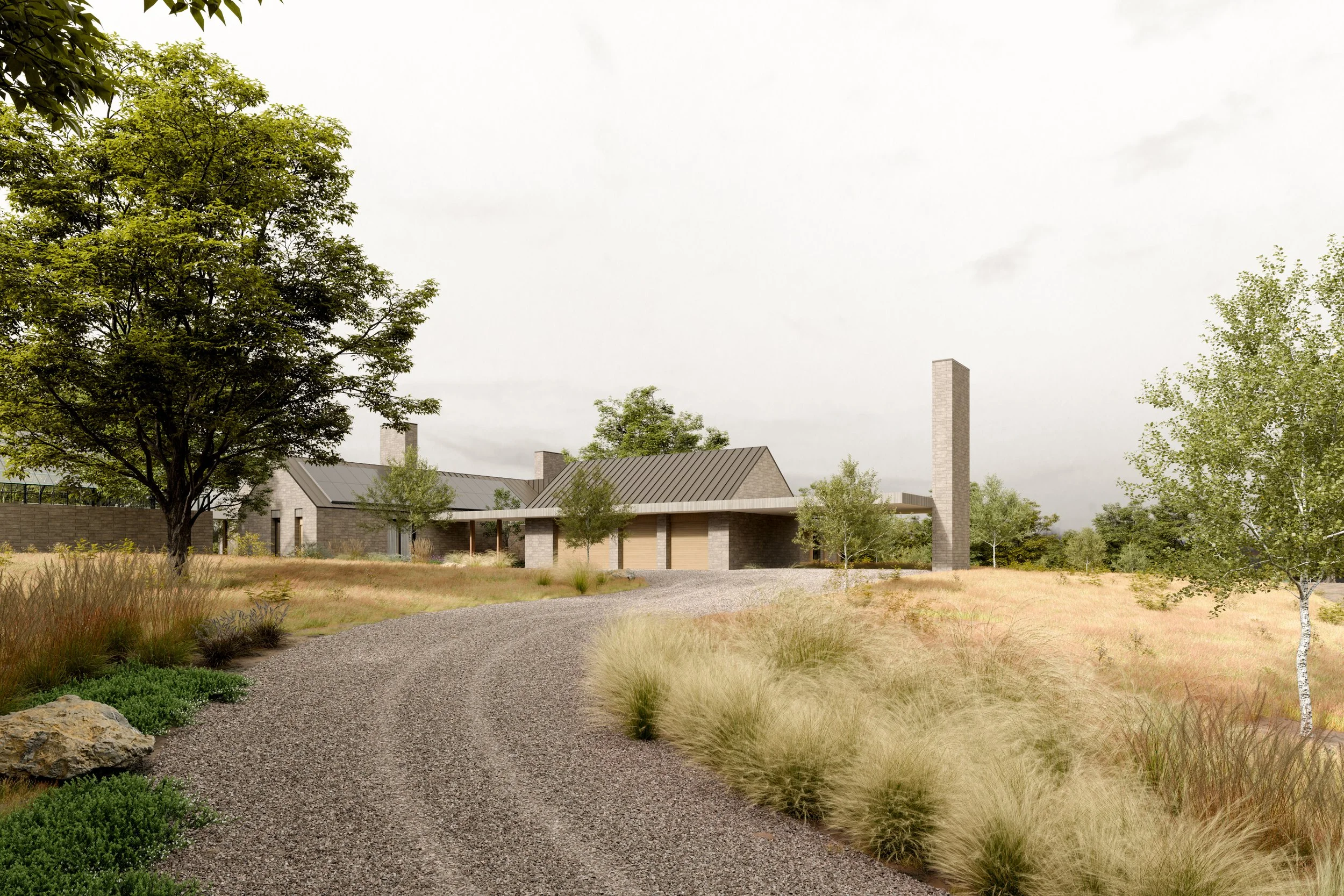
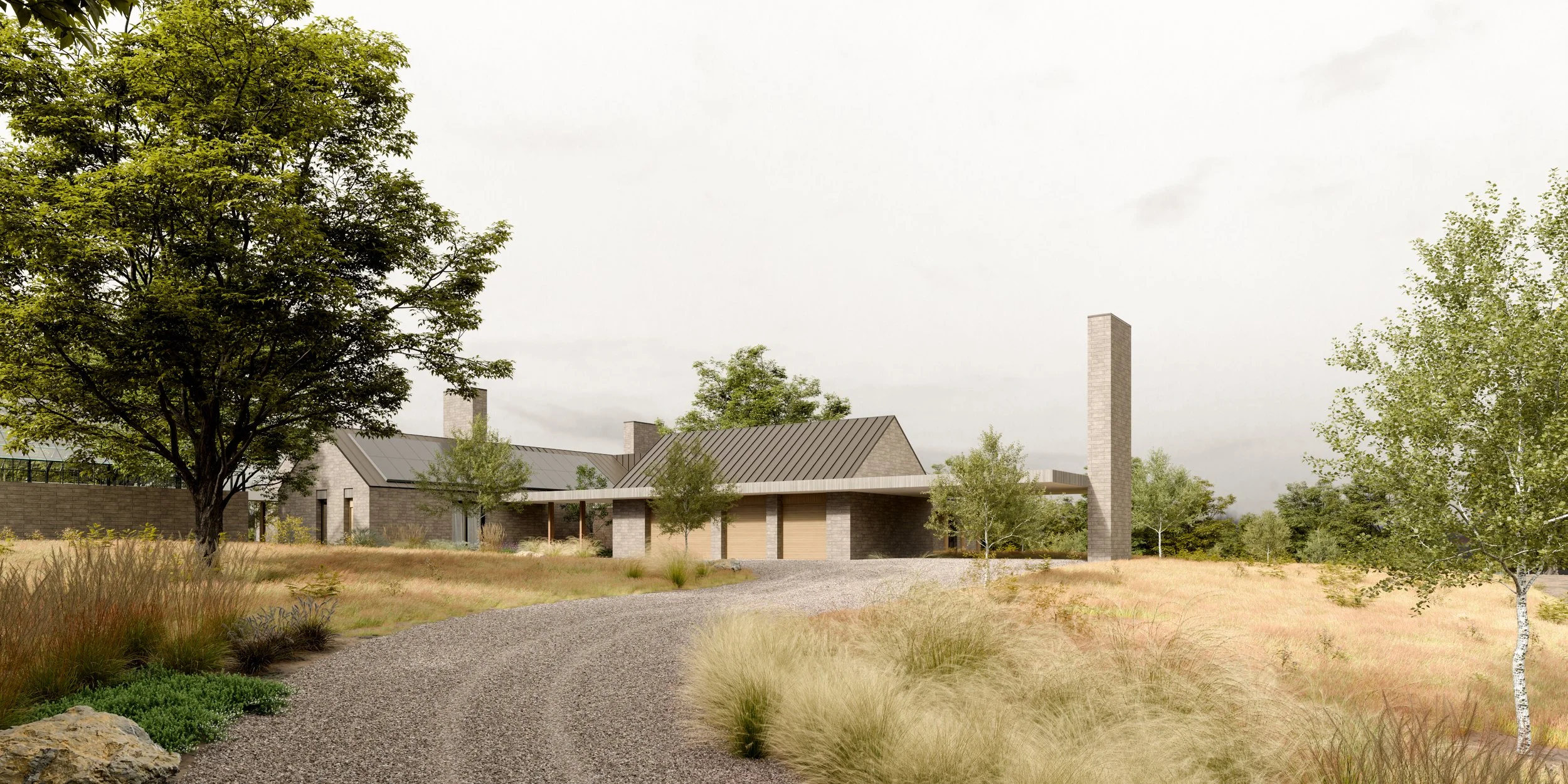
Located in the Texas Hill Country, Ranch for an Uncertain Future is a private residence designed for a multigenerational family with the ability to accommodate grandparents, extended family, and future growth. Conceived as both a home and a resilient framework for living, the project responds to increasing environmental uncertainty through adaptability, self-sufficiency, and a renewed engagement with regional building traditions.
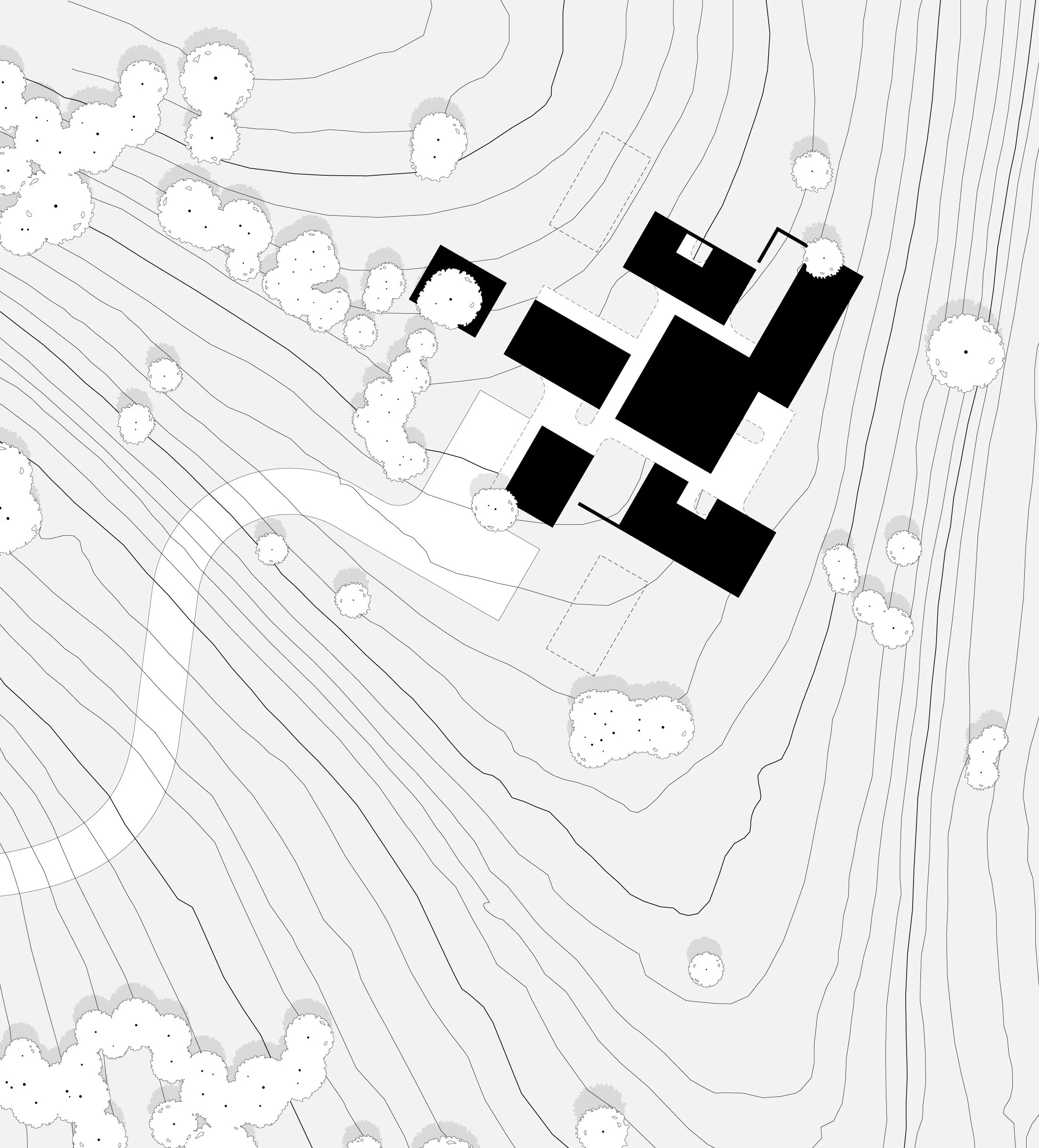
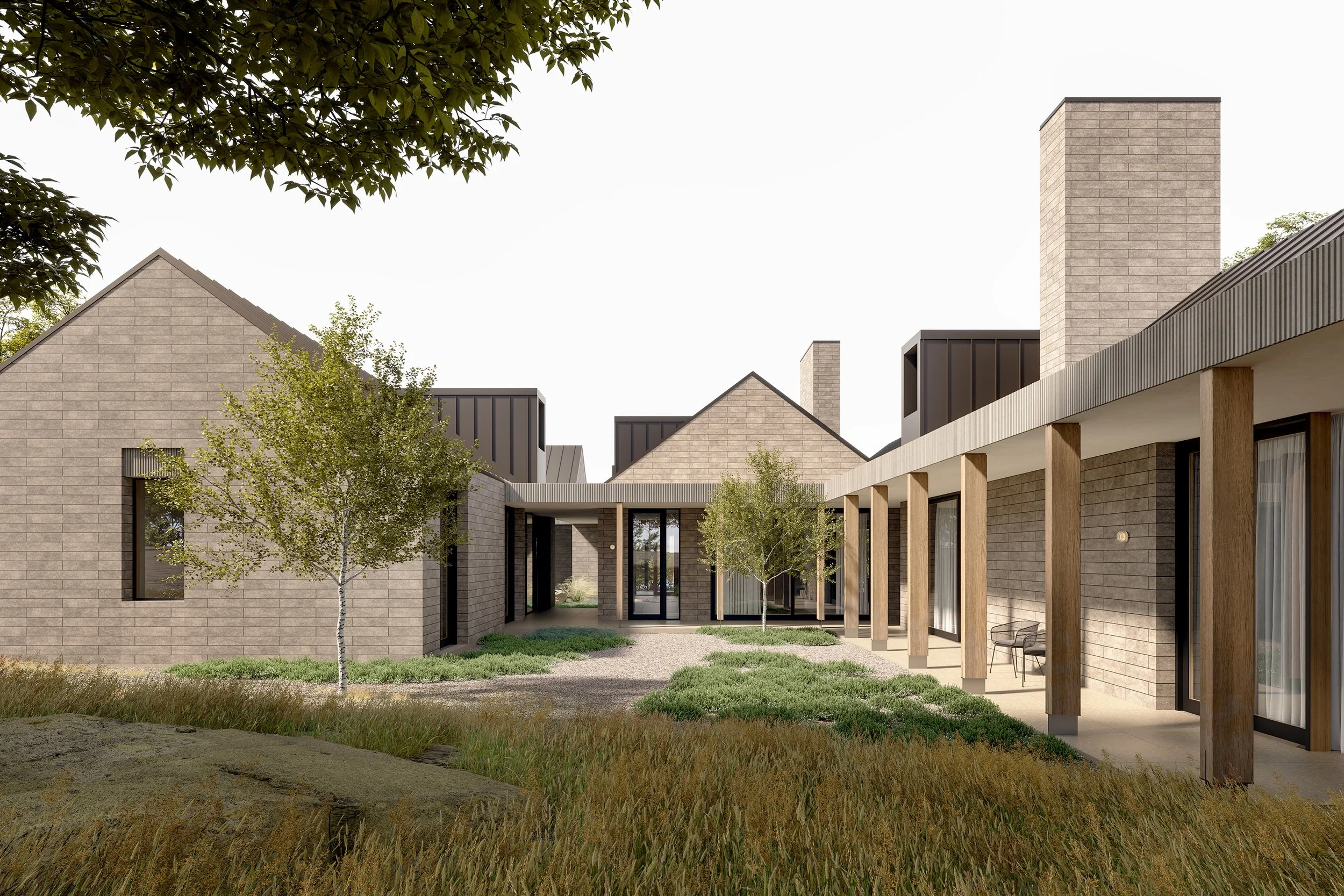
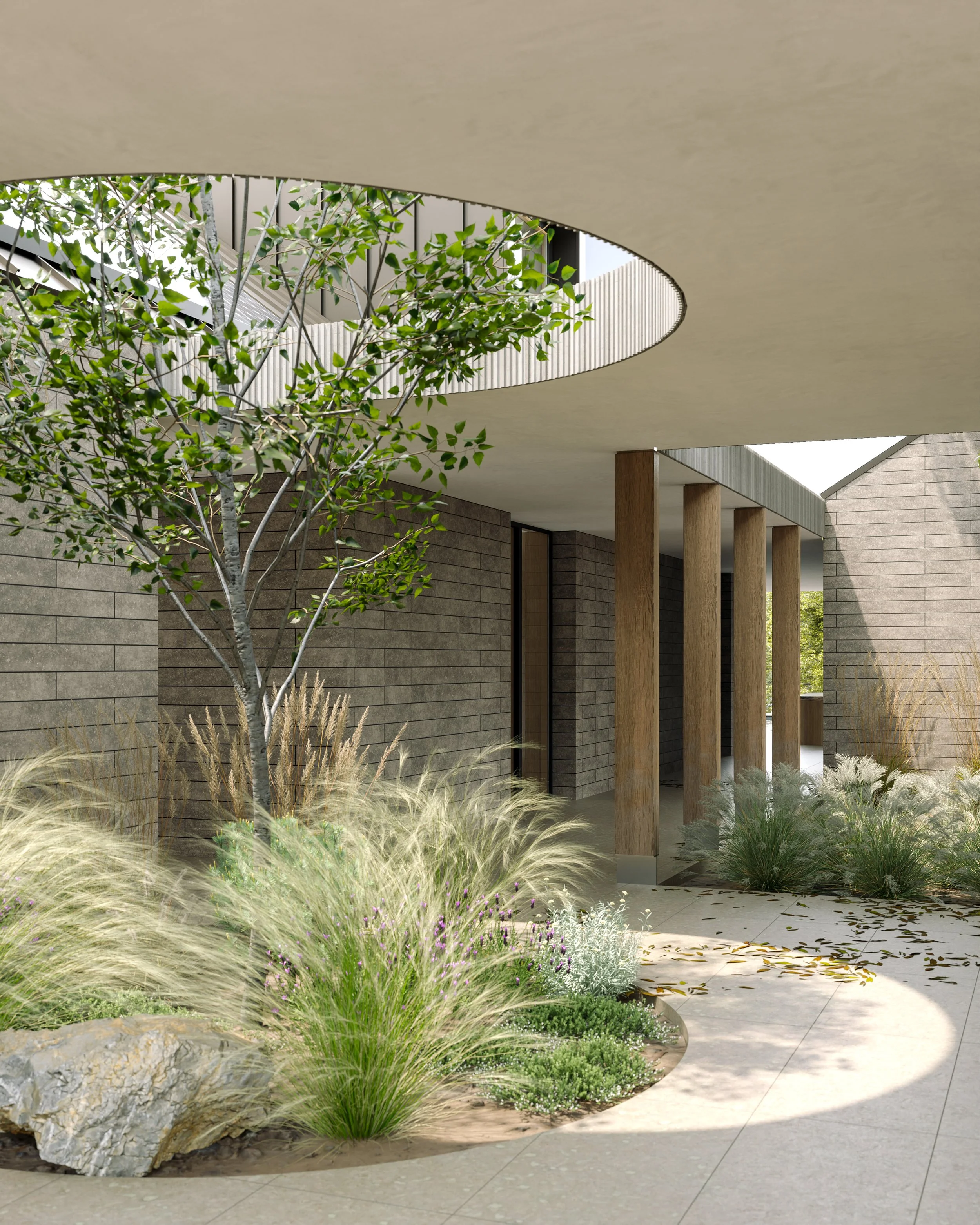
The design draws from the architectural logic of the agrarian homestead, a vernacular model shaped by incremental growth and environmental responsiveness. Simple gabled volumes are arranged across the landscape and linked by flat-roofed connections that function as shaded circulation routes and gathering spaces. Large roof openings, courtyards, and prominent chimneys bring daylight, fresh air, and a sense of collective life to the composition.
Organized as a series of discrete yet interconnected wings, the house can adapt to changing patterns of occupation over time. Additional structures may be added without compromising the integrity of the original design, allowing the project to evolve alongside the family it serves.
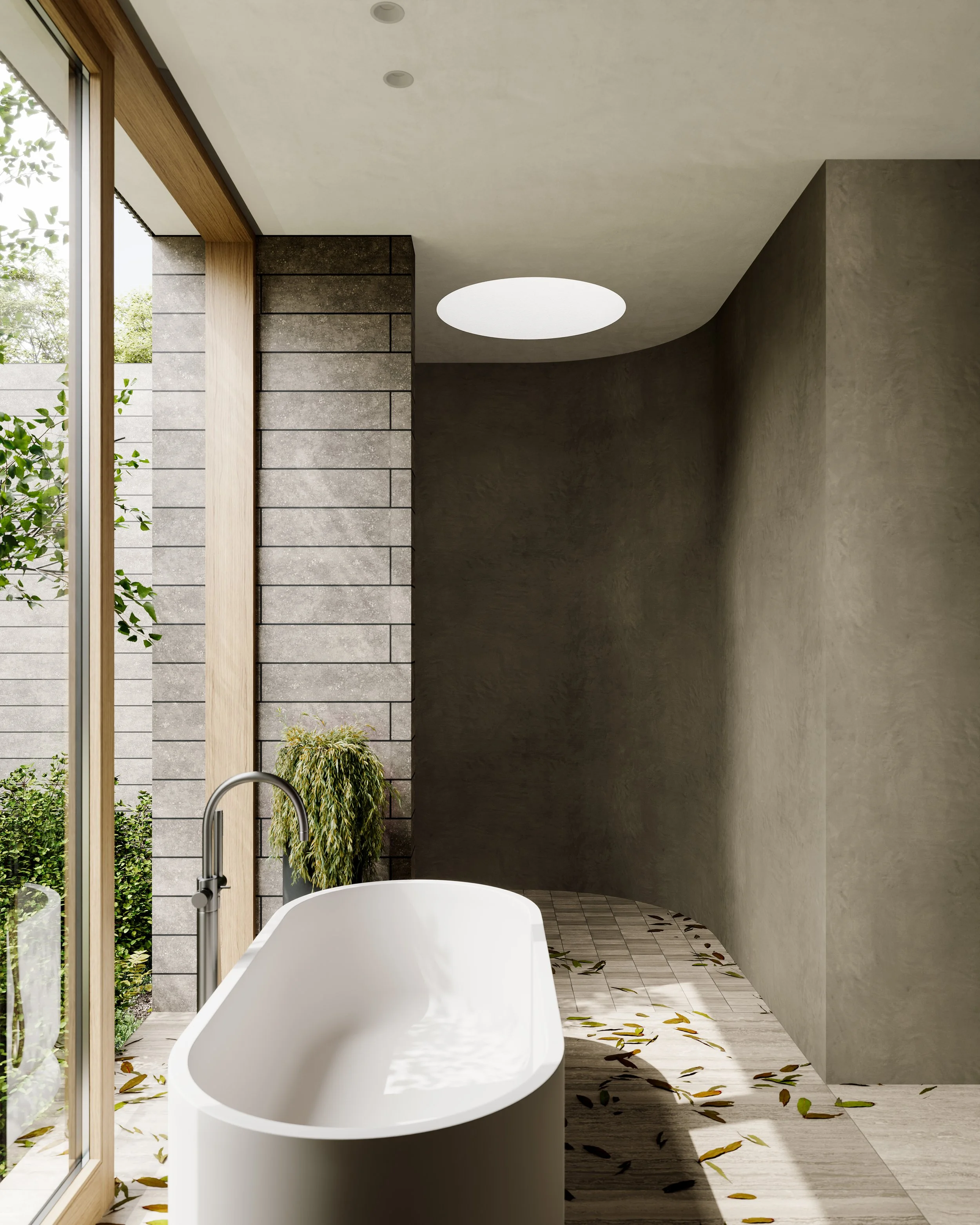
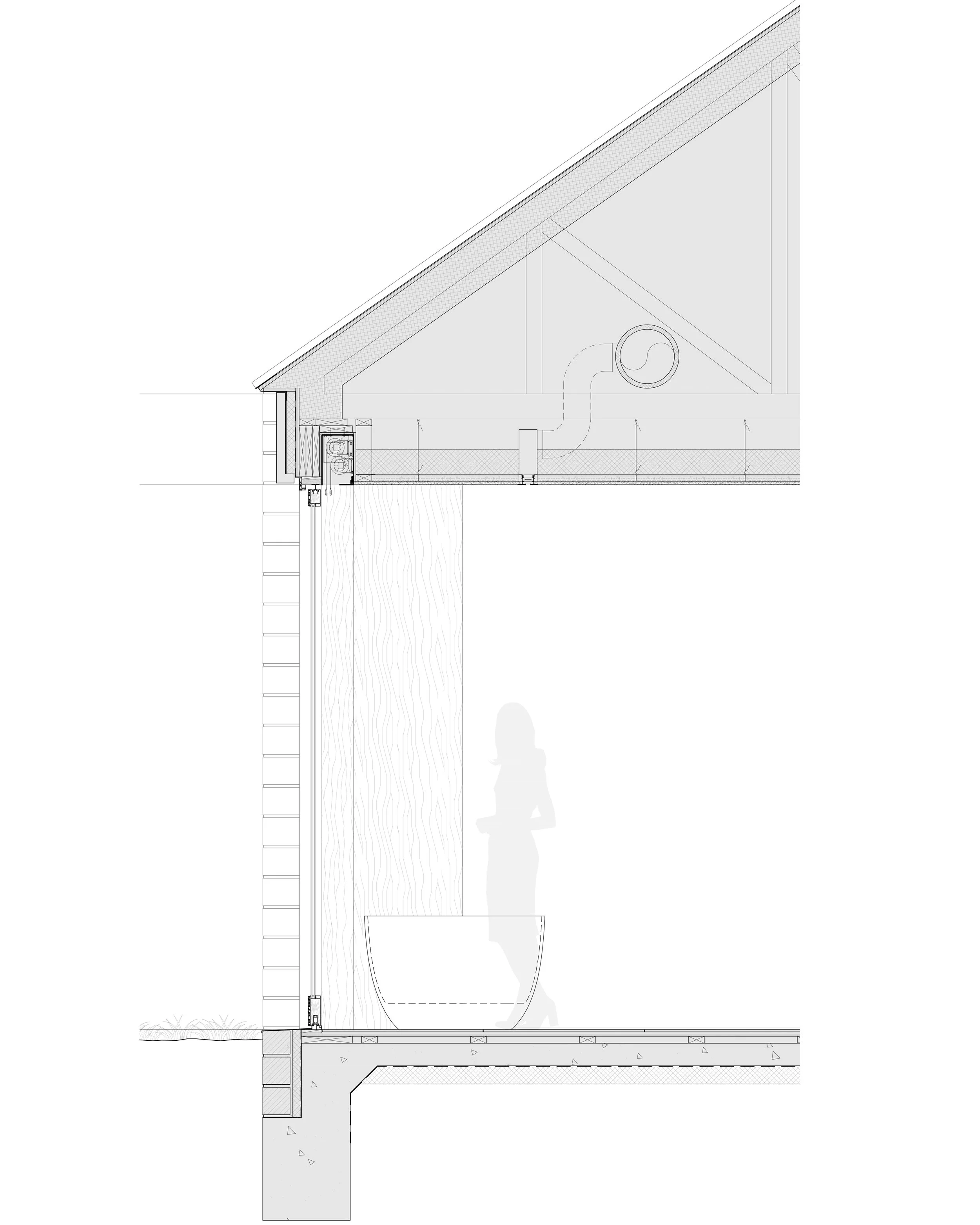
Resilience is embedded throughout the project through rainwater collection and filtration, solar power and battery backups, passive stack ventilation, earthblock walls providing thermal mass and healthy indoor environments, and a greenhouse for food production. Together, these strategies position the house as a contemporary interpretation of a self-reliant Texas homestead.

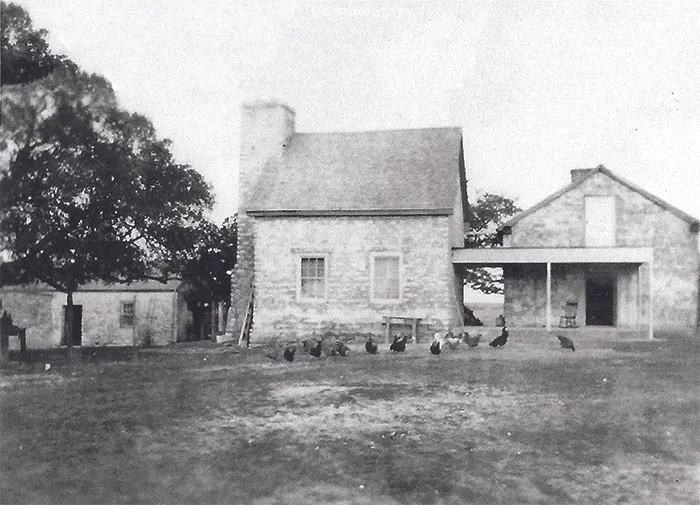
Vernacular: Agrarian Homestead & Porch
The design is rooted in the architectural logic of agrarian homesteads located throughout rural Texas. Rather than existing as a singular object, these settlements evolved over time as collections of simple structures that were added according to changing needs of their occupants. This process produced a network of porches, breezeways, and outdoor rooms that blurred the boundary between building and landscape while supporting everyday life in a demanding climate.
These precedents offer an alternative to contemporary residential models by emphasizing flexibility, outdoor occupation, and long-term resilience. Characterized by elemental forms, prominent chimneys, and occasional cupolas, agrarian buildings relied less on formal expression than on the careful arrangement of volumes and open space. Porches and other shaded exterior rooms functioned as essential social and environmental infrastructure, providing places for gathering, work, and refuge from the Texas sun.
Site Strategy
The project is organized as a series of discrete yet interconnected wings, drawing from historic settlement patterns while establishing a framework for long-term adaptability. Rather than concentrating all functions within a singular volume, the house is conceived as a collection of buildings that can operate independently or collectively in response to changing patterns of occupation.
This approach promotes both environmental resilience and resource efficiency. During periods of partial occupancy, individual wings can be selectively conditioned, reducing energy consumption and limiting resource use. In moments of disruption, including power outages or water shortages, essential living functions can be concentrated within core areas of the house while nonessential spaces are temporarily deactivated. This distributed strategy extends the effectiveness of backup systems and allows the house to respond more effectively to uncertain environmental conditions.
The organizational framework also anticipates future change. Additional structures can be added without compromising the integrity of the original composition, allowing the house to evolve alongside the needs of its occupants over time.